Discovering One of Thailand’s Most Beautiful Festivals
Every year, on the full moon night of the twelfth month of the Thai luna calendar, people across Thailand gather near rivers, canals, lakes and ponds to celebrate Loy Krathong (ลอยกระทง — lōy grà-thōng). It is one of Thailand’s best-known festivals, recognised for the beautiful sight of small, candlelit offering floating gently across the water.
If you have visited Thailand in November, you may seen photographs of this celebration or even had the opportunity to take part yourself, but have you ever wondered what Loy Krathong (ลอยกระทง — lōy grà-thōng) means, why Thai people celebrate it, and what the traditions represent?
As a Thai language learner, understanding festivals like Loy Krathong (ลอยกระทง — lōy grà-thōng) is a lovely way to explore the culture behind the language you are learning. So, let’s take a closer look at this beautiful Thai tradition.
What is Loy Krathong?
Loy Krathong (ลอยกระทง — lōy grà-thōng) is often called Thailand’s Festival of Light. The festival usually takes place in November, although the exact date changes each year because it follows the Thai luna calendar, and this year it fall on 24th November.
The name itself tells us something about the tradition, the word ลอย (lōy) is a verb meaning “to float”, while กระทง (grà-thōng) refers to the small floating vessel that people release onto the water. Together, Loy Krathong (ลอยกระทง — lōy grà-thōng) describes the act of floating a กระทง (grà-thōng).
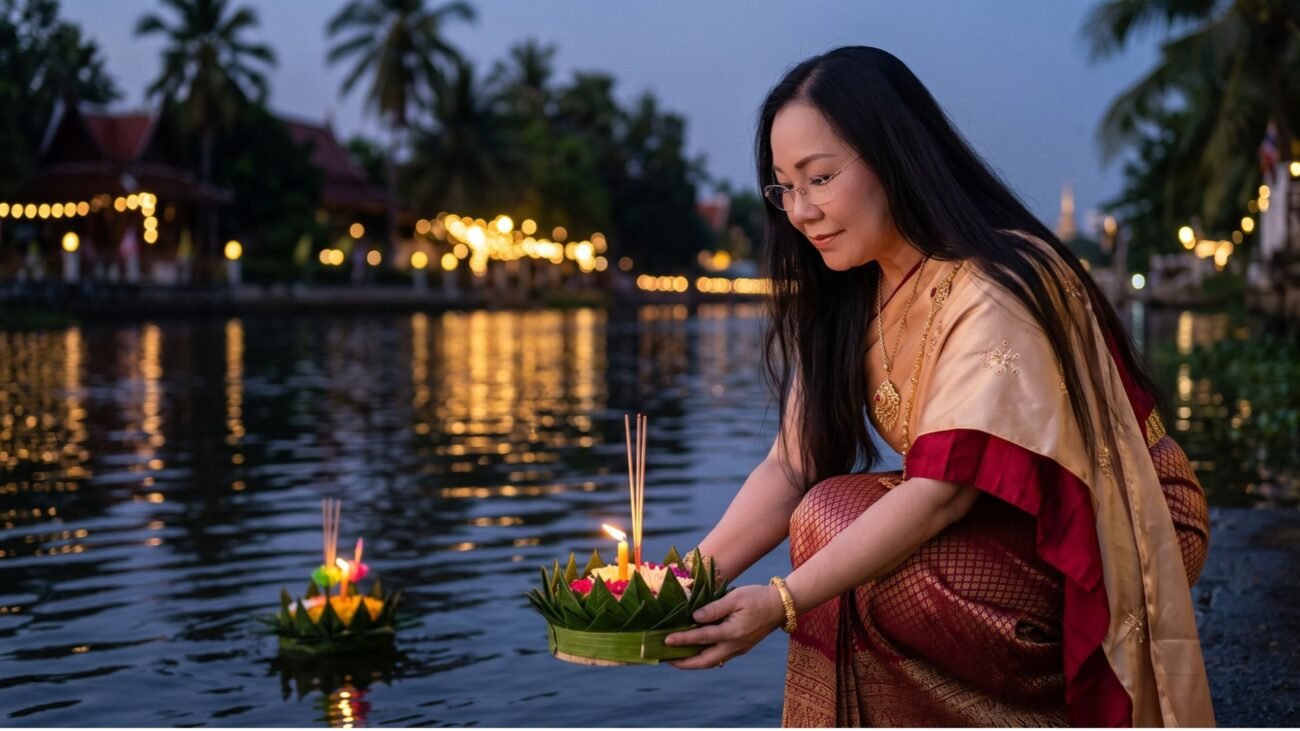
Traditionally, a กระทง (grà-thōng) is made using a section of banana trunk as its base, with folded banana leaves arranged around it. Flowers, a candle and incense sticks are often added to complete the decoration. Today, you may see กระทง (grà-thōng) in different shapes, colours and materials, including versions made from bread.
On the evening of the festival, people light their candles, make a wish or offer a prayer, and gently place their กระทง (grà-thōng) on the water. As the little lights drift away, the water become filled with a peaceful and beautiful glow.
Why Do Thai People Celebrate Loy Krathong?
One of the important meaning associated with Loy Krathong (ลอยกระทง — lōy grà-thōng) is gratitude for water. Water has always played a vital role in Thai life, supporting agriculture, food production, transport and everyday living.
Traditionally, floating a กระทง (grà-thōng) is associated with paying respect to the water and asking forgiveness for taking its benefits for granted or causing harm to it. Some people connect the tradition with the Goddess of Water, พระแม่คงคา (phrà-mâe khōng-khāa = Goddess Ganga).
For many people, the festival also represent letting go of negative feelings, misfortune and things they no longer wish to carry into the future. As the กระทง (grà-thōng) floats away, it can symbolise leaving difficulties behind and welcoming a fresh beginning.
However, the meaning of Loy Krathong (ลอยกระทง — lōy grà-thōng) is not exactly the same for everyone. Some people celebrate it as a cultural tradition, others place greater importance on its spiritual meaning, and many simply enjoy spending the evening with family and friends. This is part of what makes Thai culture so interesting. A tradition can have several layers of meaning, shaped by regional customs, family beliefs and personal experiences.
For me, Loy Krathong (ลอยกระทง — lōy grà-thōng) has always been one of my favourite Thai festival because of its spiritual meaning. As someone who feels a deep spiritual connection with the world around me, I appreciated the way this tradition brings together nature, gratitude and reflection.
One of the thing I love most about Loy Krathong (ลอยกระทง — lōy grà-thōng) is the symbolism of letting go. As we place a กระทง (grà-thōng) on the water and watch it float away, I am reminded that there are things in life we need to release so that we can move forward. Sometimes, we hold on to experiences, emotions, beliefs or situations after they have served their purpose in our lives. We may hold on because something is familiar, because we are afraid of what comes next, or because letting go feels like losing a part of ourselves.
But not everything we carry is meant to stay with us forever.
For me, letting go is not about denying our past or pretending that difficult experiences never happened. It is about acknowledging what has been, recognising what we have learned, and allowing ourselves to move forward without carrying everything with us. Some experiences teach us important lessons, while others show us what we no longer want or need in our lives. Both can help us grow.
This is why the symbolism of Loy Krathong (ลอยกระทง — lōy grà-thōng) means so much to me, watching a กระทง (grà-thōng) drift away on the water can serve as a gentle reminder to release what no longer serves our highest good and to make space for what supports our growth, peace and wellbeing. We cannot always control what happens in our lives, but we can reflect on what we choose to carry forward.
I also love that this reflection takes place in connection with nature, water has a way of reminding us that life is constantly moving and changing. Just as the water continues to flow, we too must allow ourselves to change, grow and find our own way forward. We are part of nature, not separate from it, and there is something beautiful about taking a moment to appreciate that connection.
Of course, letting go is not always easy, and it does not happen simply because we decide that we are ready. Sometimes it takes time, patience and a willingness to be honest with ourselves. But perhaps traditions like Loy Krathong (ลอยกระทง — lōy grà-thōng) give us an opportunity to pause, reflect on where we are in our lives, and consider what we are ready to release.
For me, that is part of the beauty of this festival. It is not only about the lights floating on the water or the celebration itself. It is also about the meaning we find within the tradition and the personal reflections it inspires.
Every year, Loy Krathong (ลอยกระทง — lōy grà-thōng) reminds me that life is a journey of learning, growing and letting go. And sometimes, when we are willing to release what no longer serves our highest good, we create the space we need to welcome something new.
How Do People Celebrate Loy Krathong?
Loy Krathong (ลอยกระทง — lōy grà-thōng) is celebrated in many parts of Thailand, and each location may have its own activities and atmosphere. In some places, families gather near local rivers or ponds to float their กระทง (grà-thōng) together. Markets and festival grounds may sell flowers, candles, incense and beautifully decorated กระทง (grà-thōng). You might also find traditional performances, music, food stalls, parades and cultural events.
Sukhothai is particularly well known for its Loy Krathong (ลอยกระทง — lōy grà-thōng) celebrations, which take place around the historical park. The illuminated temples and ancient ruins create a distinctive setting for the festivities.
In Chiang Mai, Loy Krathong (ลอยกระทง — lōy grà-thōng) coincides with Yi Peng (เทศกาลยี่เป็ง — thâed-sà-gāan yeê-bpēng), a Northern Thai festival associated with illuminated lanterns, the two celebrations are often experienced together, which is why photographs of Chiang Mai during this period sometimes show thousands of lights in the night sky.
Although both festivals are associated with light, they are distinct traditions. Loy Krathong (ลอยกระทง — lōy grà-thōng) centres on floating กระทง (grà-thōng) on water, while Yi Peng (เทศกาลยี่เป็ง — thâed-sà-gāan yeê-bpēng) is associated with Northern Thai lantern traditions.
If you ever have the opportunity to experience Loy Krathong (ลอยกระทง — lōy grà-thōng) in Thailand, takes a moment to observe the different ways people celebrate. You may notice that the atmosphere varies from one place to another, but the shared enjoyment of the occasion brings people together.
Useful Thai Vocabulary For Loy Krathong
For Thai language learners, festivals like Loy Krathong (ลอยกระทง — lōy grà-thōng) provide a wonderful opportunity to expand vocabulary and learn words connected with Thai culture and traditions. I have put together a list of useful vocabulary to help you talk about this beautiful Thai festival. Take some time to practise the vocabulary and see how much you remember.
- เทศกาล (thâed-sà-gāan) = festival (It refers to a festival, festive period or special occasion that takes place at a particular time.)
- งานเทศกาล (ngāan thâed-sà-gāan) = festival event / festival celebration (It refers more specifically to an organised festival even or celebration.)
- แม่น้ำ (mâe-nám) = river
- คลอง (khlāwng) = canal
- ทะเลสาบ (thá-lāy-sàab) = lake
- ทะเล (thá-lāy) = sea / seaside
- กระแสน้ำ (grà-sǎe nám) = water current
- พระจันทร์เต็มดวง (phrá-jān dtēm dūang) = full moon
- ปฏิทินจันทรคติ (bpà-dtì-thīn jān-thá-rá-khá-dtì) = the lunar calendar
- วัสดุที่เป็นมิตรกับสิ่งแวดล้อม (wád-sà-dū thêe bpēn-míd gàb sìng-wàed-láwm) = eco-friendly materials (literally: “materials that friendly with things surrounding or environment”)
- กระทง (grà-thōng) = basket / raft (originally made with banana leaves)
- ใบตอง (bāi-dtāwng) = banana leaf
- ใบไม้ (bāi-mái) = leaves
- ดอกไม้ (dàwk-mái) = flowers
- เปลือกมะพร้าว (bplèuak má-phráow) = coconut shell
- ขนมปัง (khà-hnǒm-bpāng) = bread
- ธูป (thûub) = incense sticks
- เทียน (thīan) = candle
- โคมไฟกระดาษ (khōom-fāi grà-dàad) = paper lantern (literally: “lamp paper”)
- ลอย (lōy) = to float
- ลอยไป (lōy bpāi) = to float away / to drift away
- จุด (jùd) = to light up (+ noun – for example: candle or incense stick)
- ปล่อย (bplòi) = to release / to let go / to let it be
- ดู (dūu) = to look / to watch
- การเคารพ (gāan-khāo-rób) = respect / respecting (referring to the act of respecting something)
- ลดมลพิษ (lód mōn-lá-phíd) = to reduce pollution
- ขอพร (khǎw phōrn) = to make a wish / to ask for blessings
- ขอขมา (khǎw khà-māa) = to ask for forgiveness / to apologise respectfully (It is used in everyday polite or ceremonial context, when you’ve done something wrong or may have offended someone, especially elders, teachers, or monks. It focuses on showing respect, humility and remorse.)
- ขออโหสิกรรม (khǎw à-hǒ-sì-gām) = to ask for spiritual or karmic forgiveness (It is often used when you want to release negative karma between yourself and another person, in this life or past lives. This phrase carries a deep spiritual tone.)
You can practise by saying things like:
วันนี้เป็นวันลอยกระทง
wān-née bpēn wān lōy grà-thōng
Literal: Day-this to be day float krathong.
Today is Loy Krathong Day.
พวกเราจะไปลอยกระทงที่แม่น้ำคืนนี้
phûak-rāo jà bpāi lōy grà-thōng thêe mâe-nám khēun-née
Literal: We will go float krathong at river night-this.
We will go float a krathong at the river tonight.
จุดธูปและเทียนก่อนปล่อยกระทง
jùd thûub láe thīan gàwn bplòi grà-thōng
Literal: Light incense stick and candle before release krathong.
Light the incense sticks and candles before releasing the krathong.
คืนนี้พวกเราจะไปขอขมาพระแม่คงคา
khēun-née, phûak-rāo jà bpāi khǎw khà-māa phrá-mâe khōng-khāa
Literal: Night-this, we will go ask for forgiveness from the Goddess of Water.
Tonight, we will go ask for forgiveness from the Goddess of Water.
Happy Loy Krathong
This 2026, Loy Krathong (ลอยกระทง — lōy grà-thōng) falls on Tuesday 24th November. If you are in Thailand, check local announcements for celebrations taking place near you, as activities and traditions vary between locations.
Whether you celebrate by floating a กระทง (grà-thōng), spending time with loved ones, or simply learning about the festival from afar, I hope this special occasion brings you a moment of peace and reflection.
If you are learning Thai, I hope this post has helped you understand a little more about the traditions and meaning behind the festival.
From me at Thai Language Tuition UK (TLT-UK), สุขสันต์วันลอยกระทง (sùk-sǎn wān lōy grà-thōng). May this festival bring you peace, happiness and new beginnings. 💙
You can also learn the vocabulary related to Halloween here ➜ Thai Words Related to Halloween.

One thought on “Thai Words Related to Loy Krathong”